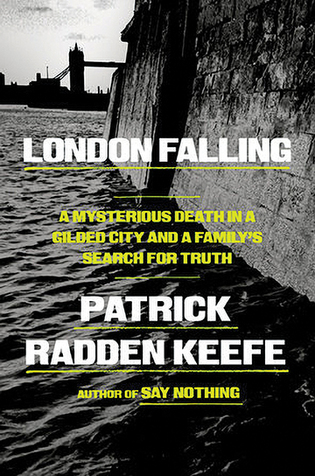
London Falling: A Mysterious Death in a Gilded City and a Family’s Search for Truth
Patrick Radden Keefe ’05JD
Doubleday, $35
Reviewed by Richard Bradley ’86
London Falling, by the New Yorker writer Patrick Radden Keefe, kicks off with a lonely death in London. At about two o’clock in the morning on November 29, 2019, a young man named Zac Brettler is caught on video walking across the balcony of a fifth-floor apartment in a luxury building overlooking the Thames River. He peers over the side of each corner, then walks to the middle of the balcony and jumps. Later, it will be argued that he was not trying to commit suicide but fleeing a violent assault.
No parent ever really recovers from the death of a child. But for Zac’s parents, Rachelle and Matthew Brettler, grieving becomes more complicated when they learn that their son had been leading a double life. For months, Zac Brettler, born and raised in London, had been posing as Zac Ismailov, the self-described expat scion of an autocratic Russian family. He’d invented the persona to ingratiate himself with the privileged children of exiled oligarchs.
What could scare a young man so much that he chose to jump off a balcony? The peculiarities of Zac’s death and life offer Keefe a troubling mystery to solve. But Keefe, whose books include Empire of Pain, an investigation of the Sackler family of OxyContin ignominy, and Say Nothing, which tells the history of Catholic-Protestant violence in Northern Ireland through the lens of a kidnapping and murder, is too obsessive a reporter not to see a larger story in the tragedy of this solitary death. The drama of London Falling is the moral corruption of 21st-century London, a see-no-evil warehouse for ill-gotten gains. This is the London of private jets carrying blandly corporate crooks, luxury townhouses with absentee owners, foreign fortunes used to buy soccer teams with few questions asked.
It is hard not to be reminded of other infamous fabulists, such as Jussie Smollett, the actor who hired two men to stage a fake assault upon him, or Anna Sorokin, the con artist who pretended to be a European heiress. The context may change, but fabulists stay largely the same and the rage of the duped can produce a terrible response.
Journalist Richard Bradley ’86 is completing a social history of Groton School, due out next year.
__________________________________________________________________
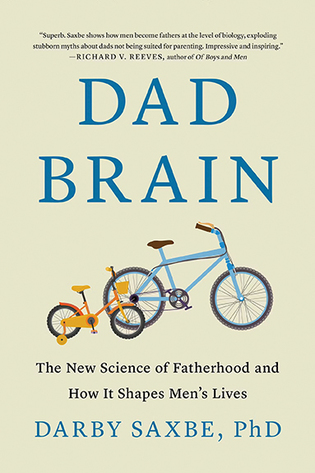
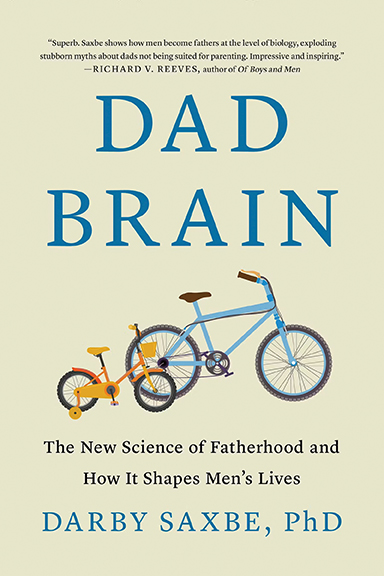
Dad Brain: The New Science of Fatherhood and How It Shapes Men’s Lives
Darby Saxbe ’99
Flatiron Books, $29.99
Reviewed by Mark Oppenheimer ’96, ’03PhD
Early in her new book Dad Brain, an enlightening tour through the developing science around fatherhood, psychologist Darby Saxbe writes, “Some readers might find it premature to celebrate fathers when our culture does so little to support mothers.” To this charge, she has a simple reply, that “parenthood is not a zero-sum game” and that “both mothers and children benefit when fathers invest in parenting.”
Saxbe is an optimist: She had a great dad herself, one who got even better after his divorce—as a part-time single father, he had to up his game. Her book offers charming anecdotes from her own life, but Saxbe always puts the data first, and the evidence for the benefits of fatherhood, to all members of the family, is wide-ranging. It seems that we men evolved to be dads, the hands-on kind. Saxbe describes the importance of hormones, explaining the drop in men’s testosterone after their children are born, how the “lower testosterone in new dads supports an adaptive trade-off toward nurturing rather than mating.” However, her own research has suggested that men with lower “T” are at higher risk for depression—a postpartum consequence that reminds us how fathers, too, can experience mental-health changes after a pregnancy.
Saxbe is attuned to the common experiences of men and women, but she is just as attuned to the differences. Because fathers have historically been more likely to be remote or distant, there are dads today who want to do better but have poor role models. Men may also be more likely to have jobs that take them away from home—in the military, for example—making them part-time absentee dads. She interviews a police officer who remembers how, as a rookie cop, with one baby and another on the way, he often wasn’t around at night: “I didn’t have control over my schedule,” he lamented.
Saxbe’s book comes at a time when birth rates are plunging and there is widespread mistrust between the sexes. She never says better fathers will solve these problems, but she can’t imagine a brighter future without them. “As long as care is undervalued,” she writes, “we won’t create the most flourishing version of our society. And as long as care is solely feminized [her itals], we will struggle to legitimize it as the important work that it is.” This smart, sprightly book shows how fatherhood is not just important, but joyful.
Mark Oppenheimer ’96, ’03PhD, a father of five, is author, most recently, of Judy Blume: A Life.
__________________________________________________________________
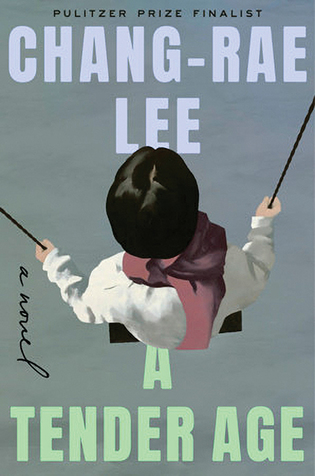
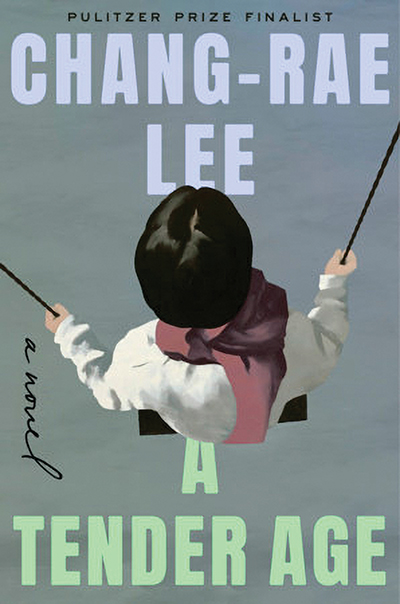
A Tender Age
Chang-Rae Lee ’87
Riverhead Books, $30 Reviewed by Anndee Hochman ’84
A Tender Age, Chang-rae Lee’s most autobiographical novel, plumbs themes familiar to the author’s work: family and food, ethnicity and class, the alienation of the immigrant experience, the yearning to belong and to be loved. But there is also something sly and unsettling at work here. In the story of Jeon-Gi, a Korean-American 11-year-old during the run-up to a life-altering summertime incident, Lee wrinkles the classic coming-of-age trope of a naïf made wise by rough experience.
“A life can catch up to you,” the novel begins. We know that something terrible will happen—has happened, because the story is narrated from the reflective distance of adulthood—and that the awful event has become one more inscrutable moment in a complicated life.
Jeon-Gi is the beloved firstborn of immigrant parents. His mother indulges him with Snickers bars and bibim naeng-myun; his physiotherapist father is attentive to his son and deeply kind. But Jeon-Gi is no innocent. References to this “tender” age become ironic as Lee reveals the prepubescent years to be a time of brutality, insult (“Chun-ky, Chun-ky,” Jeon-Gi’s classmates taunt, riffing cruelly on his name), and confusion.
A Tender Age prods us to question what it is—experience, imagination, volition—that makes a person a person. Lee blurs the line between culpability and victimhood, showing how swiftly a bullied child can turn predatory, how fantasies of revenge can morph to impulses and finally to irrevocable acts. And yet. Lee suggests that while “the world can turn you to become a certain way,” the process of becoming is lifelong, involving choice as well as circumstance.
Anndee Hochman ’84 is author, most recently, of Parent Trip: Unexpected Roads to Form a Family.
 loading


 Print
Print Email
Email